









Factory fires pose catastrophic risks to facilities, personnel, and surrounding communities, making rapid response capability essential for any manufacturing operation. The question of whether a portable fire extinguisher alone constitutes an adequate initial fire response requires an honest assessment of fire risks, facility size, and reaction timeframes. While portable fire extinguishers play an important role in factory fire safety protocols, relying exclusively on them for fire response is dangerously inadequate. Comprehensive fire protection systems that integrate portable fire extinguishers with automated suppression, detection, and evacuation systems provide the redundancy and speed necessary for effective factory fire response. LESSO understands that manufacturing facilities require sophisticated fire safety strategies that position portable fire extinguishers as one critical component within broader emergency response frameworks.
Understanding Portable Fire Extinguisher Limitations
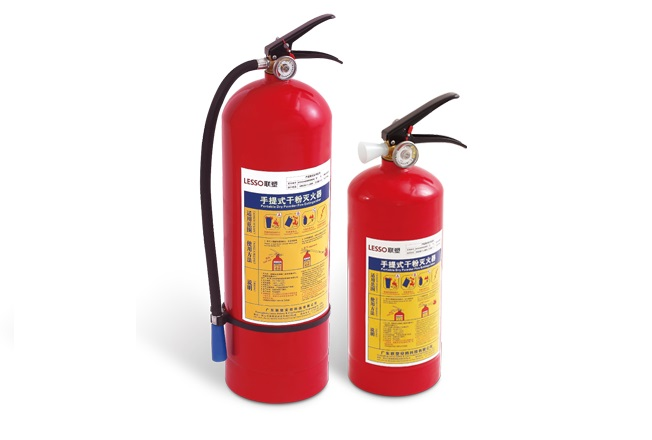
A portable fire extinguisher represents the first line of defense in fire response, but understanding its limitations proves essential for realistic safety planning. Standard portable fire extinguishers carry limited agent quantities sufficient only for small, nascent fires caught in earliest stages of development. Factory fires typically spread far more rapidly than response times allow, meaning a portable fire extinguisher may become ineffective moments after discovery. Portable fire extinguisher effectiveness depends entirely on immediate detection and personnel present at fire inception—conditions rarely guaranteed in operational factories. Relying solely on a portable fire extinguisher for factory fire response represents unacceptable risk when manufacturing operations involve combustible materials or electrical hazards.
Integration with Automated Suppression Systems
Effective factory fire response requires integrating portable fire extinguishers with automated suppression systems that respond immediately when fires develop. Sprinkler systems and gas suppression networks activate automatically without waiting for human detection or decision-making, providing rapid response that portable fire extinguishers cannot match. A portable fire extinguisher becomes more valuable when integrated into comprehensive systems where automated responses buy time and reduce fire intensity. Factory fire response strategies should position portable fire extinguishers as backup systems supporting primary automated suppression. This layered approach ensures that if a portable fire extinguisher proves insufficient, secondary systems continue protecting the facility and personnel.
Personnel Training and Accessibility Requirements
A successful factory fire response using portable fire extinguishers demands well-trained personnel strategically positioned throughout facilities. Training programs must ensure workers understand portable fire extinguisher operation, recognize appropriate usage situations, and know when evacuation becomes necessary. Effective factory fire response requires portable fire extinguishers mounted in easily accessible locations with clear signage and unobstructed pathways. In large manufacturing environments, considerable distances between work areas and nearest portable fire extinguisher locations can prove fatal in emergency situations. Facilities relying on portable fire extinguishers must analyze response times realistically and position equipment accordingly.
Specialized Fire Hazards and Equipment Selection
Different manufacturing processes generate unique fire hazards requiring specific portable fire extinguisher types matched to materials present. Class A fires involving ordinary combustibles differ fundamentally from Class B fires involving flammable liquids or Class C fires involving electrical equipment. Factory fire response capabilities depend on having appropriate portable fire extinguisher types distributed strategically. A portable fire extinguisher suitable for one hazard class may prove completely ineffective against another—or even dangerous if applied incorrectly. Comprehensive factory fire response requires professional hazard assessment determining which portable fire extinguisher types should be available throughout facilities.
Regulatory Requirements and Compliance Standards
Building codes and safety regulations establish minimum portable fire extinguisher requirements for manufacturing facilities. Factory fire response planning must exceed minimum code compliance, recognizing that regulations establish baselines rather than comprehensive safety. Professional risk assessment typically reveals that portable fire extinguisher distribution exceeding regulatory minimums provides meaningful improvement in emergency response capability. LESSO advocates for exceeding minimum compliance standards, recognizing that factory fire response represents one of the highest priority safety considerations for manufacturing operations.
Conclusion
While portable fire extinguishers constitute essential components of factory fire response systems, they cannot function as standalone solutions for manufacturing fire protection. Effective factory fire response requires integrating portable fire extinguishers with automated suppression systems, detection networks, trained personnel, and evacuation procedures. Facilities that rely exclusively on portable fire extinguishers for fire safety face an unacceptable risk that comprehensive safety strategies easily mitigate. By positioning portable fire extinguishers within broader fire protection frameworks that include automated systems and professional response infrastructure, factories create layered defenses that protect facilities, personnel, and surrounding communities effectively.
