









The choice of pipeline orientation—vertical or horizontal—is a primary design consideration that determines the appropriate specifications for a stainless steel ball check valve. The ball mechanism within the valve relies on gravity, back pressure, or spring force to reseat and prevent backflow. How gravity interacts with the ball and the internal valve seat dictates the potential for leakage, chattering, and required spring modifications. LESSO Group is a professional manufacturer that deliver reliable stainless steel valve supply according to the needs and demands of applications, regardless of the required pipeline geometry.
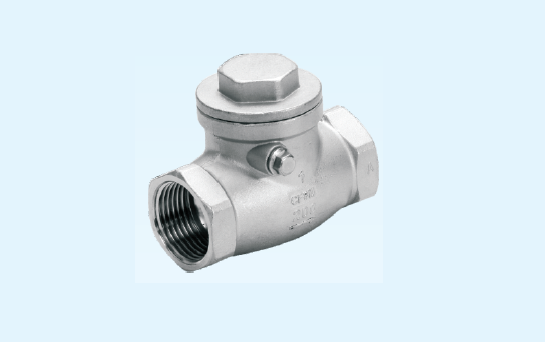
The Core Dynamic: Gravity and Closure
The most significant difference between vertical and horizontal installation lies in the role of gravity. The stainless steel ball, being dense, is constantly pulled downward. In the ideal vertical installation, this gravitational force is aligned with the direction of flow reversal, actively assisting the sealing process. In a horizontal installation, however, gravity pulls the ball sideways towards the bottom of the pipe, meaning the valve must rely almost entirely on spring tension or the backflow pressure differential to force the ball onto the seat.
Vertical Installation (Upward Flow)
Vertical pipelines, where the fluid flows upward, represent the optimal installation scenario for a free-floating (non-spring-loaded) stainless steel ball check valve.
Gravity-Assisted Closure: Upon flow reversal or pressure loss, the ball immediately drops with the assistance of gravity directly onto the concave seat. This provides extremely rapid and reliable sealing.
Optimal for Viscous Media: As noted in the discussion of corrosive or slurry applications, the vertical orientation aids the valve’s self-scouring action, ensuring solids are fully flushed out as the ball seats.
Minimal Pressure Drop: A free-floating ball in a vertical run can be lifted easily by forward flow, minimizing resistance and energy loss.
Design Simplicity: Often, no internal spring is required, simplifying the design and maintenance of the valve.
Horizontal Installation Challenges and Solutions
Installing a stainless steel ball check valve horizontally introduces complexity because gravity is perpendicular to the flow path.
Risk of Chatter and Wear: When flow slows down, gravity pulls the ball to the bottom of the pipe, causing the ball to roll or chatter before it can be centered and sealed by the reversing fluid. This rolling action can increase wear on the ball and seat, leading to premature leakage.
Requirement for Spring Loading: To counteract the sideways pull of gravity and ensure the ball centers and seats quickly, horizontal installations almost always require a spring-loaded design. The spring provides the necessary axial force to guide the ball immediately back into the seating area upon cessation of forward flow.
Higher Cracking Pressure: The added spring tension means the forward fluid must overcome not only the ball's weight but also the spring force. This results in a higher minimum pressure required to open the valve (cracking pressure) and a slightly increased pressure drop Δ P during operation.
Suitability for Slurry and Abrasive Media
In both orientations, the stainless steel ball check valve is superior for slurry and viscous media compared to traditional swing checks. However:
Vertical: Ideal, as solids tend to drain cleanly away from the seat.
Horizontal: Requires careful design to ensure the ball, when resting on the bottom of the pipe, does not allow solids to build up around the side of the seat. The self-scouring action is less effective when the ball is guided or resting against the pipe wall.
Conclusion
The installation orientation fundamentally changes the required specification of the stainless steel ball check valve. Vertical, upward flow is ideal for free-floating designs, providing maximum efficiency and reliable gravity-assisted sealing, particularly for slurry and viscous fluids. Horizontal installation almost universally requires a spring-loaded design to overcome the lateral pull of gravity and ensure a rapid, centered seal, accepting the trade-off of a slightly higher cracking pressure. Engineers must specify the correct spring tension and material grade when relying on a professional manufacturer like LESSO to ensure optimal backflow prevention and operational lifespan.
