









While many modern plumbing and hydronic applications favor the quick, quarter-turn operation of the ball valve, the brass gate valve remains the superior and often essential choice for specific pipeline isolation needs. It is engineered for true on/off service where the flow path must be completely unobstructed when open, a requirement that maximizes system efficiency and minimizes wear. Understanding its design—which involves a wedge-shaped gate that moves perpendicular to the fluid flow—is key to determining its optimal application. LESSO, recognized for its reliable component manufacturing, ensures the supply of durable brass valves, including those specifically designed for full-bore pipeline isolation requirements.
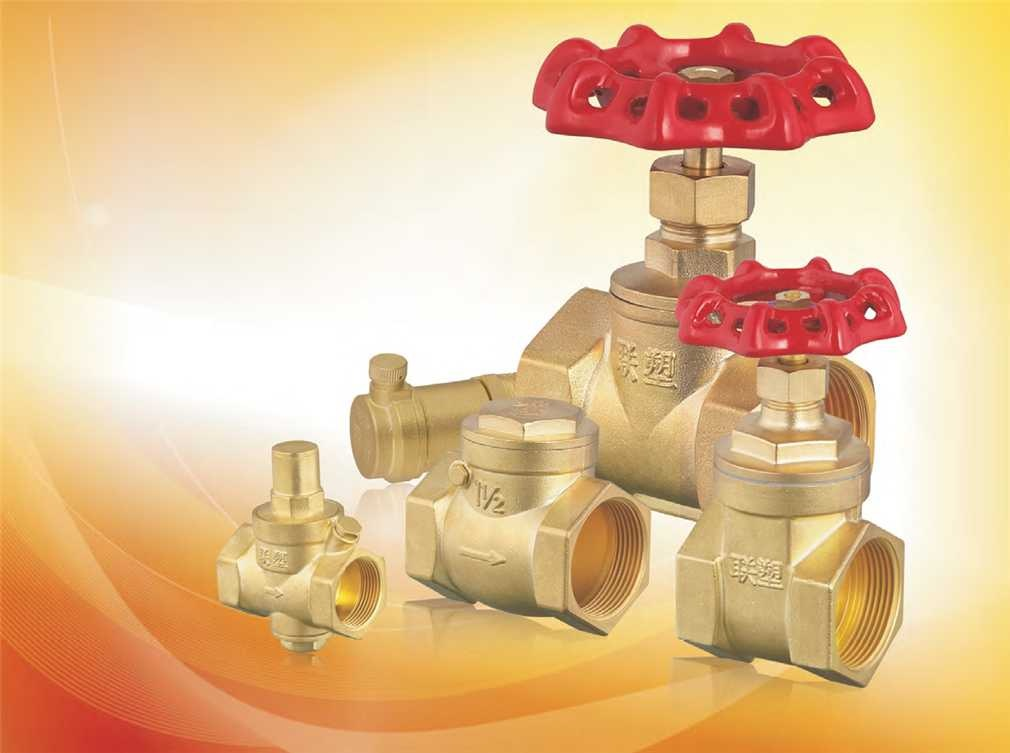
Designed for Full-Bore, Unrestricted Flow
The primary advantage of the brass gate valve is its ability to provide full-bore flow when fully open. Once the gate is completely lifted out of the fluid path, the pipeline is left totally unrestricted. This design minimizes pressure drop across the valve, which is critical in systems transporting high-viscosity fluids or those requiring high flow rates with minimal energy loss. In contrast, ball valves, even those considered "full-port," can still introduce a slight constriction. For systems like main water lines, where flow must be maximized with zero impedance, the full-bore capacity of the brass gate valve makes it the undisputed champion for isolation.
Optimal for On/Off (Stop-Start) Service
A common mistake is using a gate valve for throttling or flow regulation. The design of the gate and seat ensures that the brass gate valve operates best when fully open or fully closed. Operating it in a partially open (throttled) position causes excessive vibration, leading to rapid wear and potential damage to the gate and seats (a condition known as wiredrawing). Therefore, the gate valve is the optimal choice only when the application strictly calls for complete, infrequent isolation—such as emergency shut-off points or maintenance isolation—rather than daily flow adjustment.
Durability and Resistance to Wear in Isolation Mode
Brass is the material of choice for this type of valve due to its robustness and resistance to dezincification (a form of corrosion). Since the brass gate valve is used sparingly—only for full isolation—the brass body ensures that the component remains sound and capable of delivering a bubble-tight seal even after years of inactivity. The simple sliding motion of the gate, when correctly implemented for on/off duties, prevents the constant friction and seal degradation that can plague other valve types in similar conditions, leading to exceptional component longevity.
Suitability for Larger Pipe Sizes
While ball valves are excellent up to moderate pipe diameters, the gate valve design scales efficiently to much larger pipe sizes (especially beyond 6 inches). Due to the mechanical forces involved in sealing, large-diameter ball valves become unwieldy and prohibitively expensive. In contrast, scaling the brass gate valve allows for effective, high-pressure isolation in major pipelines, such as those used for water mains or large industrial cooling loops. Its long-established reliability in these critical, large-scale applications solidifies its role as a necessary isolation valve.
Conclusion
The brass gate valve is not a universal solution, but it is undeniably the optimal choice for permanent pipeline isolation where full, unobstructed flow is a prerequisite for efficiency. Its durable brass construction and specialized design for on/off operation make it essential for safety shut-offs and maximizing flow capacity in critical main lines. Whether you require a robust brass gate valve or a high-performance brass ball valve, utilizing a trusted supplier like LESSO ensures access to the necessary quality and range of fluid control components for any piping system requirement.
