









In process engineering and industrial piping, the choice between a globe valve and a ball valve is a decision between two distinct operational philosophies: precise flow regulation versus quick, positive isolation. While both are critical components typically constructed from durable stainless steel, their internal design dictates entirely different flow control advantages. Understanding these differences is paramount for optimizing system performance and preventing component damage. LESSO is a professional manufacturer that deliver reliable stainless steel valve supply according to the rigorous needs and demands of applications requiring either throttling or isolation.
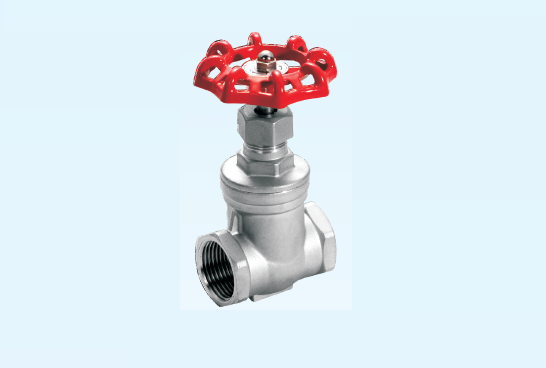
The Stainless Steel Globe Valve: Excellence in Throttling
The stainless steel globe valve is specifically engineered for flow regulation and throttling service. Its design forces the fluid to take a tortuous path, flowing through a port restricted by a movable disc or plug. This controlled restriction allows for incredibly precise adjustment of flow rates in applications such as sampling lines, steam systems, or cooling water loops. Critically, the seating surfaces of the stainless steel globe valve are designed to handle the high velocity and pressure differential created during throttling without suffering from the "wire drawing" (erosion) that would rapidly destroy a partially open ball or gate valve.
The Stainless Steel Ball Valve: Quick Isolation and Low Resistance
In direct contrast to the globe valve, the stainless steel ball valve is designed for quick, tight, on/off isolation service. Its central component is a rotating ball with a bore through the center. When open (a quarter-turn), the flow path is straight and unrestricted (full-bore), resulting in minimal pressure drop and zero resistance. This is ideal for main pipelines or utility lines where the goal is to fully open the line to maximize flow or fully close it quickly for maintenance or emergencies. The primary flow control advantage of the ball valve is its speed and efficiency when flow is not being regulated.
Flow Path and Pressure Drop Comparison
The fundamental difference in flow control stems from the internal geometry. The stainless steel globe valve flow path is non-linear—fluid changes direction twice (up and down) as it passes through the body. This tortuous path generates significant turbulence and a much higher pressure drop than other valves. This pressure drop is an expected feature that aids in regulation. Conversely, the straight-through path of a ball valve minimizes friction and energy loss. If high flow efficiency and minimal pumping effort are required during operation, the ball valve is preferred; if precise regulation is needed, the higher pressure drop of the stainless steel globe valve is accepted.
Operational and Maintenance Considerations
Due to its design, the stainless steel globe valve requires a multi-turn operation to move the disc from fully open to fully closed, giving the operator fine control over the flow rate. However, its complex internal structure makes it heavier and more prone to fluid contamination buildup than a ball valve. The ball valve, with its simple, quick operation, is lighter and self-wiping, making it better for fluids containing minor suspended solids. Therefore, the stainless steel globe valve offers functional longevity in demanding throttling applications, while the ball valve offers simplicity and efficiency in isolation roles.
Conclusion
The choice between a stainless steel globe valve and a ball valve should be based strictly on function. If precise, continuous flow regulation (throttling) is required, the globe valve is the only optimal solution, despite its inherent pressure drop. If rapid, non-obstructed, on/off isolation is needed, the ball valve is the clear winner due to its efficiency. LESSO is a professional manufacturer that deliver stainless steel valve supply, including both high-performance globe valves and ball valves, ensuring that engineers can select the right component type and material grade for their exact fluid control requirements.
