









Wastewater treatment plants (WWTPs) present one of the most challenging environments for fluid control components. The media is highly variable, containing a potent mix of corrosive chemicals, abrasive solids, and microbial activity. In this context, standard materials quickly degrade, leading to high maintenance costs and critical system failure. For reliable pipeline isolation, the stainless steel gate valve is the industry standard due to its exceptional resistance to the unique chemical and physical stresses of this environment. LESSO is a professional manufacturer that deliver reliable stainless steel valve supply according to the rigorous needs and demands of this critical infrastructure sector.
The Aggressive Nature of Wastewater Media
The corrosion profile of wastewater is complex. The media contains chlorides, which attack the passive layer of most metals, and hydrogen sulfide gas, which is released by anaerobic digestion and, when combined with water, forms corrosive sulfuric acid. Furthermore, the presence of bacteria (Microbiologically Induced Corrosion, or MIC) can accelerate localized deterioration. For this reason, standard carbon steel is immediately unsuitable. The robust composition of the stainless steel gate valve is designed to withstand continuous exposure to these complex corrosive agents, providing a stable barrier in equalization basins, aeration tanks, and sludge handling lines.
Superior Pitting Resistance with 316 SS
For WWTP applications, Grade 316 stainless steel is typically the minimum requirement for a stainless steel gate valve. The key to its performance is the addition of Molybdenum, which drastically improves its resistance to pitting and crevice corrosion—the two most common forms of localized failure in a chloride-rich environment. Pitting is particularly dangerous because it can penetrate the valve body quickly without obvious external signs. The superior chemical inertness of 316 stainless steel ensures that the sealing surfaces and internal components of the stainless steel gate valve maintain their integrity, securing long-term leak-proof isolation.
Handling Abrasive Solids and Scaling
Beyond chemical attack, wastewater contains suspended solids (grit, sand, and sludge) that create abrasive wear, especially around the valve seats. While frequent throttling can damage any valve, the gate valve's design, which lifts the gate entirely out of the flow path during isolation service, minimizes contact with abrasive media when fully open. When closed, the robust nature of the stainless steel gate valve construction resists the erosive action of solids and scaling better than softer materials. This dual resistance—chemical and physical—is what makes this valve ideal for sewage and sludge lines.
Ensuring External and Atmospheric Corrosion Control
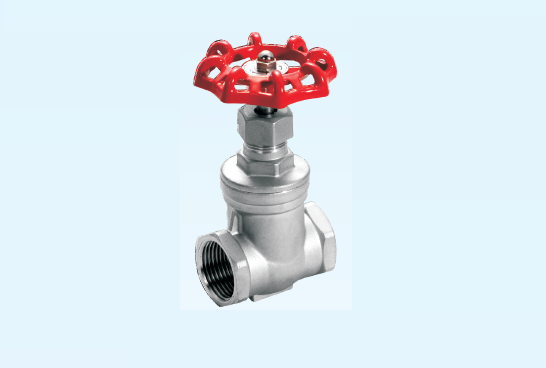
Corrosion resistance is required not only inside the pipe but also externally. WWTPs are inherently wet, humid environments, often with high concentrations of airborne chlorine used for disinfection or sulfur compounds released from treatment processes. The exterior of a standard metal valve can rust quickly in this atmosphere. The chromium oxide layer on a stainless steel gate valve provides essential atmospheric corrosion resistance, ensuring that the critical external components, such as the handwheel, stem, and packing gland, remain operable and safe throughout the component's service life.
Conclusion
The selection of a stainless steel gate valve for wastewater treatment is a non-negotiable step to guarantee system safety and maximize operational life against intense chemical and physical degradation. The Molybdenum content in 316 SS provides the necessary resistance to pitting and crevice corrosion, while the valve’s robust design handles the abrasive solids. By choosing a professional manufacturer like LESSO, users ensure they receive a reliable stainless steel valve supply that meets the stringent quality and material traceability required for this challenging application, thus safeguarding the performance and compliance of the entire treatment facility.
