









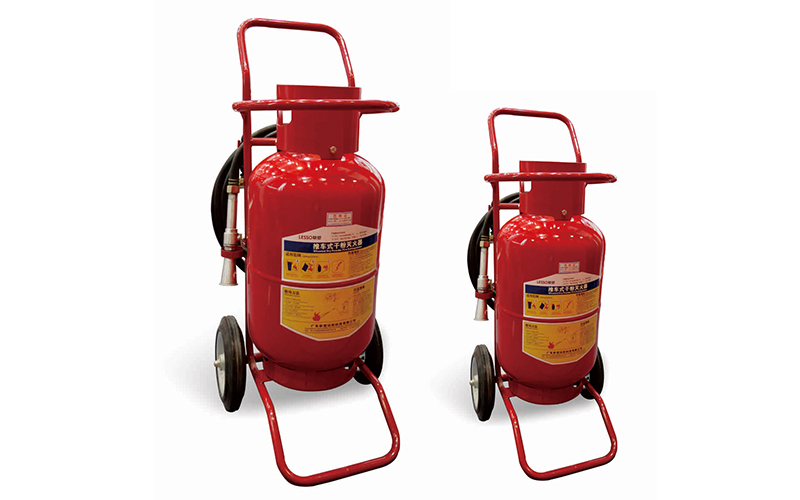
Chemical facilities and manufacturing plants storing hazardous materials face unique fire suppression challenges requiring specialized knowledge and equipment. Selecting the appropriate chemical agent for a fire extinguisher with wheels deployed in chemical zones demands careful analysis of stored materials, fire hazards, and suppression effectiveness. Using an incompatible chemical agent in a fire extinguisher with wheels can prove catastrophic, potentially intensifying fires or creating dangerous reactions. Understanding which suppression agents work optimally in chemical environments is essential for facility managers responsible for fire safety in hazardous material zones. LESSO has developed an advanced fire extinguisher with wheels systems specifically engineered for chemical facility applications, incorporating agents proven effective against complex hazard combinations found in industrial chemical zones.
Understanding Chemical Zone Fire Hazards
Chemical facilities present fire scenarios fundamentally different from standard industrial environments. A fire extinguisher with wheels deployed in chemical zones must suppress fires involving reactive compounds, flammable liquids, and materials prone to unexpected reactions. Chemical zone fires may involve materials that react violently with water or specific suppression agents, requiring careful agent selection. Understanding the specific chemicals stored in facility zones enables proper fire extinguisher with wheels specification. LESSO recommends conducting comprehensive chemical hazard assessments that identify appropriate fire extinguisher with wheels agents before equipment deployment. This rigorous approach prevents incompatibilities between suppression agents and stored materials.
Dry Chemical Powder Agents for Multi-Class Protection
Dry chemical powder represents the most versatile chemical agent for a fire extinguisher with wheels in chemical zones. These fire extinguisher with wheels agents effectively suppress Class A, B, and C fires without creating dangerous reactions with most industrial chemicals. Dry powder agents work by interrupting chemical combustion reactions rather than relying on water or cooling mechanisms. A fire extinguisher with wheels using dry chemical powder provides broad protection across diverse chemical scenarios. LESSO manufactures fire extinguisher with wheels equipment utilizing premium dry chemical formulations optimized for chemical facility applications where fire hazards vary unpredictably.
Carbon Dioxide Systems for Specialized Applications
Carbon dioxide-based fire extinguisher with wheels systems prove superior for facilities storing sensitive materials or requiring minimal residue. CO2 agents remain non-conductive and non-reactive with nearly all industrial chemicals, making a fire extinguisher with wheels using carbon dioxide ideal for electronics-adjacent hazards. The disadvantage is that carbon dioxide fire extinguisher with wheels units require larger physical size to achieve equivalent suppression capacity. Facilities prioritizing minimal equipment damage and zero chemical residue benefit from carbon dioxide-equipped fire extinguisher with wheels deployment in chemical zones. LESSO offers premium carbon dioxide fire extinguisher with wheels systems for applications where non-reactive suppression proves essential.
Wet Chemical Agents for Specialty Hazards
Specialized wet chemical formulations exist for facilities with specific chemical hazard profiles requiring tailored suppression approaches. A fire extinguisher with wheels utilizing wet chemical agents addresses particular material classes that standard dry powder struggles to suppress effectively. Wet chemical fire extinguisher with wheels systems perform exceptionally for facilities handling cooking oils, reactive metals, or other specialty chemicals. However, wet chemical fire extinguisher with wheels agents typically provide narrower hazard coverage than multipurpose dry powders. Proper hazard assessment determines whether a fire extinguisher with wheels using wet chemical agents provides sufficient protection for specific facility zones.
Compatibility Testing and Regulatory Verification
Selecting appropriate chemical agents for a fire extinguisher with wheels requires formal compatibility testing against materials stored in facility zones. Professional hazard assessment laboratories test fire extinguisher with wheels agents against facility chemicals, verifying non-reactive performance. A fire extinguisher with wheels must receive regulatory approval for specific chemical zone deployment through proper testing documentation. Facilities should never deploy a fire extinguisher with wheels based on assumptions—formal verification ensures chemical agent compatibility. LESSO assists customers in conducting compatibility assessments that verify fire extinguisher with wheels agents are appropriate for specific chemical facility applications.
Strategic Placement and Personnel Training
Installing a fire extinguisher with wheels in chemical zones requires strategic positioning near high-risk areas while maintaining safe distances. Personnel responsible for a fire extinguisher with wheels operation in chemical zones must receive specialized training addressing unique hazards. Training should address which chemicals react dangerously with specific fire extinguisher with wheels agents, when suppression attempts should cease, and evacuation procedures. Well-trained personnel using properly specified fire extinguisher with wheels equipment dramatically improve chemical zone fire response effectiveness.
Conclusion
Selecting the optimal chemical agent for a fire extinguisher with wheels in chemical zones demands careful hazard analysis and compatibility verification. LESSO's comprehensive fire extinguisher with wheels portfolio includes specialized systems engineered for chemical facility applications, with agents proven compatible with complex hazard profiles. By conducting rigorous chemical assessments and deploying appropriately specified fire extinguisher with wheels equipment, facilities ensure reliable fire suppression without dangerous reactions or incompatibilities. Organizations prioritizing chemical compatibility when selecting fire extinguisher with wheels systems significantly improve emergency response effectiveness while protecting personnel and infrastructure in hazardous material environments.
